| |
Nature Notes |
Nature Notes is a blog written by Support Coordinator Kate Aubury about the wildlife on our reserves, managed land and the local area. All photography (unless otherwise stated) is the author’s own and is subject to copyright. Any opinions expressed are the author's own. If you have any questions on the blog, please contact Kate by email; kate@kemerton.com |
|
Some Tips on Gardening for Invertebrates in Winter - added 05/12/14
As the weather finally turns colder my thoughts have turned to those garden jobs still waiting to be finished. I confess the constant rain has prevented me – a fair weather gardener! – from making much progress in the last few weeks but now I need to tidy up, dead head, remove dead annuals and empty the pots and put them away till the spring. But for those of you out there planning a similar year end tidy up, spare a thought for the critters hiding in the garden and don’t get too carried away – a tidy garden is a barren garden for wildlife.
Winter is a tough time for invertebrates as they must combat the cold weather and – for the herbivorous amongst them – a lack of food as the plants they rely on have stopped flowering and dropped their leaves. To survive the season, many have evolved to enter a dormant phase through the toughest months; re-emerging in the spring as the plants come back to life. Different insects hibernate at different stages in their lifecycle – some such as aphids choose to spend the winter as eggs, some remain dormant in larval form including ground beetles and the Speckled Wood butterfly, which overwinters as a caterpillar, some, like the Large White butterfly, wait out the cold in their pupas, whilst others opt to overwinter as adults such as Small Tortoiseshell butterflies, queen bumblebees and ladybirds. Whilst dormant, in whatever form, they need safe places to keep warm and dry through the winter months and our gardens can be important habitats for this.
So why not cut down on your gardening workload and lend a helping hand to our overwintering creepy crawlies by leaving them some areas to hide in or under. Leaves, log piles, insect houses and empty pots can all be turned into hibernacula for invertebrates. Here are some suggestions:
• When raking up your fallen leaves, don’t remove them all to the compost, rake some into small piles that can be left under shrubs or against fences to provide warm, dry places for beetles, ladybirds and spiders to hide in.
• Stack some empty pots upside down along the shed wall for a safe spot for hibernating snails.
• After dead heading your plants, take a handful of dead stems and tie into a bundle. Take a plastic water/soda bottle and cut the bottom and top off to create a tube. Fill with the stems and hang in the garden for lace wings, ladybirds and solitary bees.
• Make a log pile in a shady, damp corner of your garden – the dead wood is great for lots of invertebrates including woodlice and the larvae of various beetles and you will also get fungi sprouting on the rotting wood.
• Leave a pile of broken pottery, slates or small stones tucked in a quiet corner as a haven for spiders and slugs.
If you want to get truly creative, why not consider a ‘bug hotel’, like this one our volunteers built at Kemerton Lake Nature Reserve (or something a little smaller if your garden isn’t large). There’s lots of inspiration online - just google bug hotel and let your imagination go wild!
And as you plan your spring bulbs, remember to choose nectar rich varieties of crocus, daffodil and tulip to provide vital early nectar for emerging bees and other pollinators.
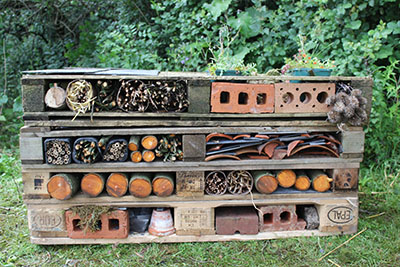
Bug Hotel at Kemerton Lake Nature Reserve
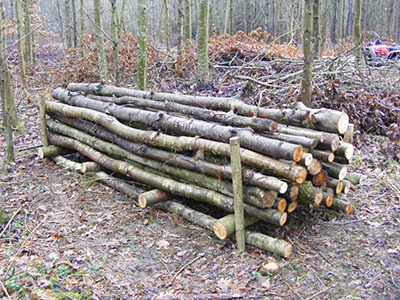
Beetle Lodge in Kemerton Woods
|
|
Woodland Mammals Movie - added 30/11/14
We've collected lots of wonderful footage from our two Bushnell Trail Cameras over the summer and I have been busy processing it all. The starring role definitely goes to all the mammals we have videoed so I thought it would be fun to put together a compilation of some of the clips we've gathered from Kemerton Woods. Below is a link to the video on Youtube:
|
|
A day out with Bredon Forest School - added 28/08/14
If you were lucky and had a country childhood like mine, when you were a kid, you got to play outdoors for hours on end, getting muddy and grass stained, climbing trees, building dens and swimming in the local watering hole. I know my love of nature started very young and I am sure that was at least in part thanks to the hours I spent with my brothers outside. My favourite activity as a child was climbing trees; for me, it was a wonderfully challenging activity to climb higher and higher, limb by limb, into the tree tops! The views were amazing and the feeling of accomplishment - along with the smug knowledge that my brothers could never quite follow as far – was worth all the effort.
Unfortunately, these days children spend a lot less time outdoors than they once did and many do not get to enjoy the simple but enjoyable activities we took for granted. Safety conscious and busy parents and ever-increasing rules and regulations take away many of the freedoms that we had and children lose out by not having those experiences. The National Trust, in a bid to halt this trend, has compiled a wonderful list of 50 things to do before you are 11¾, to encourage parents to get kids outdoors and ensure they get a taste of the good life. Preferably with lots of mud involved!
With all this in mind, I was delighted to be invited to attend a fun day earlier this week at Bredon Forest School. Run by the wonderful Debbie Manns – who also runs Kemerton Playschool – Bredon Forest School is a safe way for children from playschool age to 10 to get back to nature. I took my six year old niece Emma along to join the 30 odd children who were spending the day in a local woodland owned by Kemerton Estate which is used by Bredon Forest School for their camp. The money raised by the fun days is donated to Kemerton Conservation Trust, which is why Debbie suggested I come along and see what they all get up to. There are only a few rules at forest school, the best of which is that everyone should have fun; one rule the kids are happy to adhere to! Groups of older children roamed the woodland with minimal supervision building fantastic dens using great team work, whilst the younger children showed off their creativity with water and mud, or searched for interesting bugs on the woodland floor. My niece declared the swing her favourite activity and spent most of the morning either on it or helping to push other kids when it was their turn. By lunchtime, when regrettably I had to leave (with a reluctant child in tow) all the kids had happy, mud smeared faces and the sense of camaraderie was fantastic. So if you have young kids and you think they would enjoy a few hours going wild, why not book them into a forest school fun day session soon – dates are on the website and are in the school holidays. I can recommend it as a great way to allow your child a taste of the freedom we took for granted, in a safe and nurturing environment.
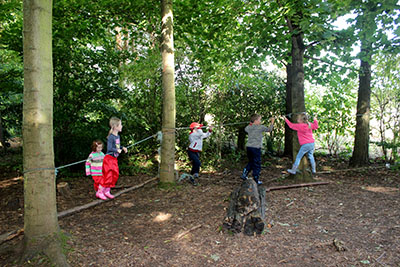
Balancing act - Emma & friends on the rope obstacle course
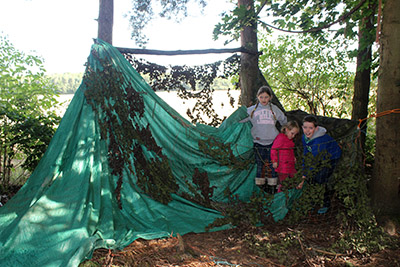
A fabulous den under construction - complete with camouflage!
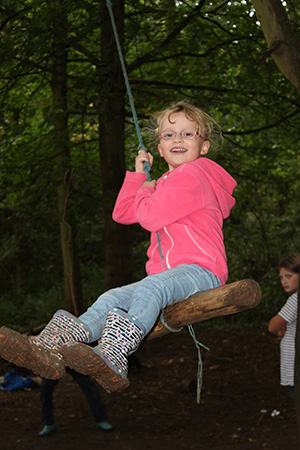
Emma enjoying the rope swing
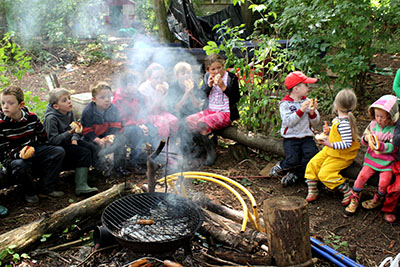
Hungry kids wolf down hot dogs at lunchtime around a camp fire
Getting children close to nature is a wonderful way of teaching them many skills and instilling in them a love of wildlife that will hopefully never leave them. Who can forget the fun of collecting frogs eggs in a jar and watching them gradually metamorphose into little froglets, or the joy of hand rearing caterpillars, collecting leaves and watching them get ever bigger. If you have young kids and you haven’t done so yet, why not take them out to fly a kite the next time the wind blows or encourage them to roll down a hill or go pick blackberries in the hedge – they are juicy and ripe right now and perfect for eating. Your children will discover a new world of adventure and fun and at the very least you’ll find it brings back some wonderful childhood memories!
|
|
Wildflower Banks are Abuzz with Bees & Butterflies – added 25/06/14
Today I had a spare couple of hours so, as the sun was shining and I fancied an afternoon of photography, I headed up to the Wildflower Banks above Westmancote Tracks. These banks are owned by Overbury Estate but KCT has assisted in their management for years and they are awash with colourful flowers at this time of year; particularly Scabious, Knapweed, Ox-Eye Daisy and Pyramidal Orchid. This profusion of nectar makes the banks a hotspot for butterflies, bees, moths and other pollinators.
My particular focus this time was the Marbled White, a stunning butterfly which can be found in large numbers at this site. Although relatively widespread and increasing, Marbled White prefer unimproved limestone or chalk grassland, so need to be sought out at the right locations. The adults prefer purple flower such as Knapweed and they lay their eggs on several tall grass species. The Wildflower Banks are ideal for them as they combine the tall grasses with their favourite nectar plants.
The weather was perfect for butterflies and numbers of most butterfly species are up this year after the good summer last year and the mild winter. On arriving I was delighted to find large numbers of Marbled White – more than I can recall seeing on this site in the last few years – so I had ample opportunity to get some cracking shots. If you love butterflies and want to see some of these stunners for yourself, head up there now. Marbled Whites are only on the wing in late June and July so you need to get your skates on!
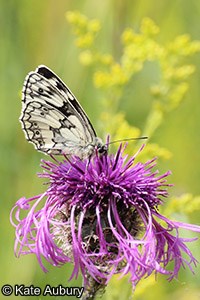
Marbled White on Knapweed, Westmancote Wildflower Banks
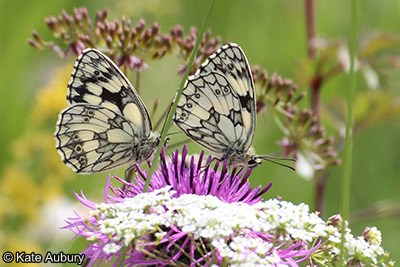
Two Marbled Whites on Knapweed
There were also a lot of other butterflies to be seen including Peacock, Meadow Brown, Ringlet, Skipper (Large & Small) and Small Tortoiseshell. In a few weeks there’ll be Red Admiral and Gatekeeper too.
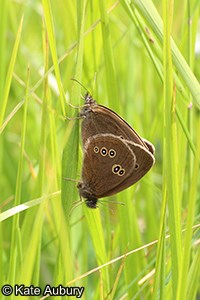
Ringlets mating
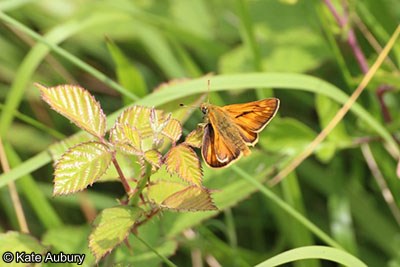
Large Skipper (male) on bramble
I also photographed both Five Spot and Six Spot Burnet. So all in all, a successful afternoon.
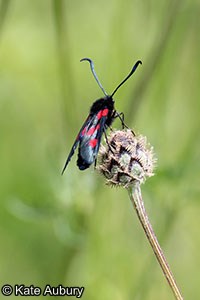
Five-spot Burnet
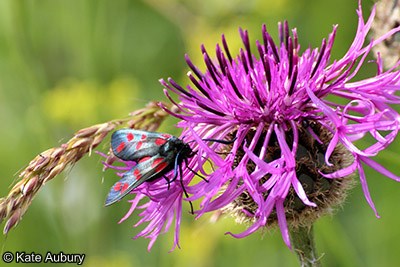
Six-spot Burnet
The Wildflower Banks are a perfect example of how nature can flourish if given just a small space in which to thrive. Imagine how many more butterflies we would have if there were more margins and verges filled with floral variety. I would love to see more wildflower strips like this and am hoping that Buglife’s B-Lines project will help make this a reality in the future. |
|
Trail Cameras Capture Fantastic Footage – added 10/06/14
Well, the two Bushnell trail cameras that we recently purchased have now been up and running at Kemerton Lake Nature Reserve for a few weeks and we’ve already got some superb footage. It’s taken a few goes to figure out how best to utilise them and deciding where to site them to optimise our chances of interesting action is still very much trial and error but a recent stint outside one of our badger setts has resulted in some lovely videos. Here’s a link to a compilation of the best clips on Youtube:
This sort of footage is exactly what we are hoping for – fun and informative, it will allow us a window into the lives of our more elusive wildlife that we simply would not get otherwise. We will be focussing primarily on nocturnal and shy animals such as badger and otter in the first instance, but we will also use the cameras to support project work.
The cameras are now headed up to the Ash Bed, where they will be used to monitor the wildlife grazing on ground flora and shrubs in this small ash coppice. The information will be used in our ongoing Ash Bed Restoration Trials. |
|
|