Twyning Ham was reportedly once the largest flood meadow in England, and like Asham Meadow, it remains one of only a handful of Lammas meadows to have survived agricultural improvement during the 20th century. Natural England has designated it a Site of Special Scientific Interest (SSSI) for its breeding populations of wading birds and scarce plants. In 1993, KCT purchased two strategic sections of the ham totalling 17 acres (6.9 ha).
Due to its location on the Avon floodplain, the meadow spends large parts of the winter underwater. Nutrients are provided by sediments left behind after flooding. As with Asham, Twyning Ham is owned by multiple parties but is managed ‘in common’ under the traditional Lammas system.
Flora and Fauna
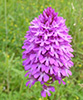
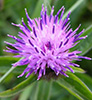
Twyning Ham provides habitat for breeding waders such as redshank, curlew, snipe and lapwing. It is also home to a number of scarce plants that are only found in seasonally-flooded unimproved grassland (classified as ‘MG4’) such as narrow-leaved water-dropwort, mousetail and great burnet.
Access Information
OS grid reference: SO 9180 3777
Like Asham, Twyning Ham is defined as Access Land under the CROW Act, and as such, the public has right to walk over it responsibly, subject to common sense restrictions such as not damaging the hay crop. Dogs are not permitted during the nesting season (1 March to 31 July) or at any other time near livestock unless they are kept on a fixed lead of no more than 2 metres long. The ham is most easily accessed from the north end of Northfield Lane in Twyning. |
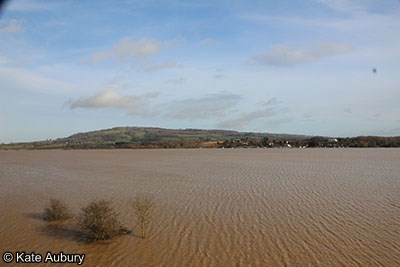 Twyning Ham SSSI during winter flooding Twyning Ham SSSI during winter flooding
|