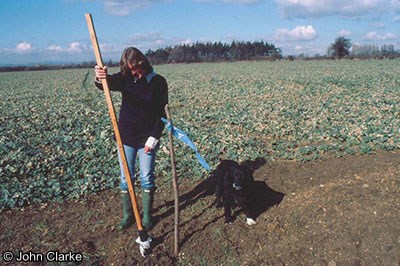
Kemerton Conservation Trust (originally named Kemerton Trustees Limited) was founded in 1989 by Adrian Darby (former chairman of the RSPB, Plantlife International and the UK Joint Nature Conservation Committee), in response to the catastrophic national decline in farmland biodiversity. The Trust was able to build on the the pioneering conservation work carried out on Adrian’s farm, Kemerton Estate in Worcestershire, from 1980 onwards. The Trust is particularly indebted to John & Pamela Clarke, the estate’s Conservation Officers from 1983 to 1986, who laid the foundations for so much of the work that has followed since.
The Trust’s early work focused on developing ways to maintain wildlife habitat within a modern farming environment. Its pioneering studies into the use of chemically-untreated arable field margins helped to bring about a change in government policy and the widespread adoption of this practice. For more information, please follow the link to our Practical arable wildflower conservation paper.
In 1991, the government introduced the first agri-environmental scheme for farming – the Countryside Stewardship Scheme. This saw farmers being paid for undertaking a wide range of conservation measures. As the popularity of this and subsequent schemes grew throughout the 90s and into the noughties, KCT’s work began to broaden to encompass the four purposes that underpin all we do to this day.
In 1993, the Trust purchased its first nature reserve; eight strips of flood meadow at Twyning Ham. It now owns or leases six reserves in the local area, which are managed for the benefit of nature conservation. For more details, please visit our wildlife sites page.
Click on the links below to find out more about our Board of Governors, Key Personnel and Governance:
Board of Governors
Key Personnel
Governance |